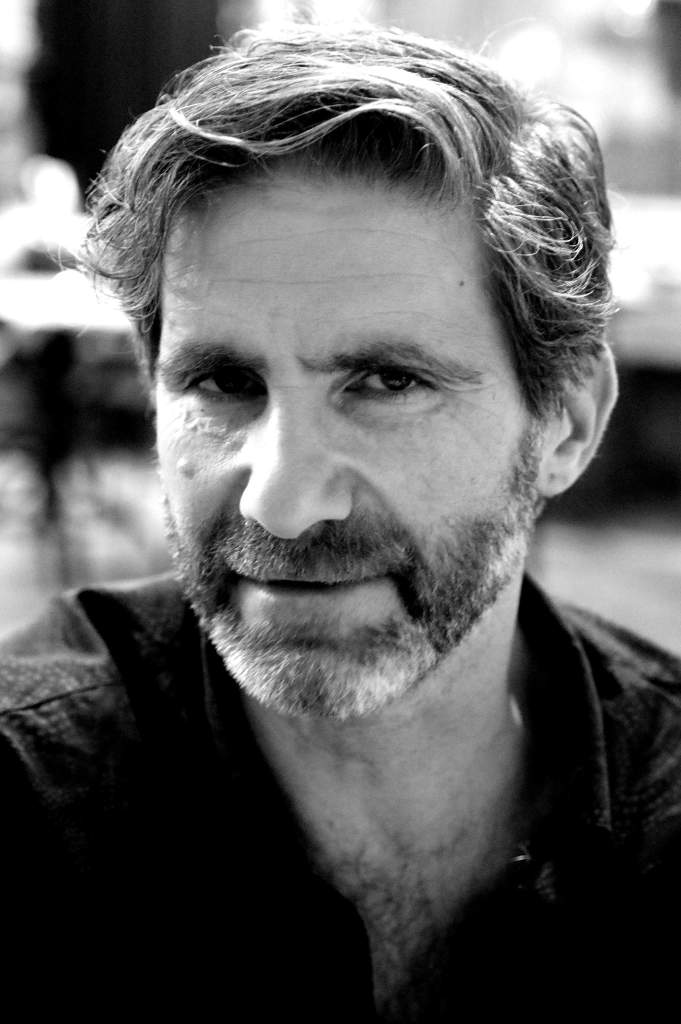
Jon Harris – a specialist accountant with over thirty years’ experience in the creative and cultural industries, and author of Managing Your Money: The Compact Guide – shares his top tips to help finish your tax return and beat the deadline.
Every January, approximately one-third of the UK’s adult population have the happy new year’s task of ensuring they’ve submitted their self-assessment tax return to HRMC (His Majesty’s Revenue and Customs) ahead of the 31 January deadline.
Tax returns are long, boring and overcomplicated – but if you’re self-employed, they’re also necessary. Around 60% of self-assessment returns are completed without the assistance of accountants and tax advisors, and I believe that a similar proportion can and indeed should apply to creative industry taxpayers: with the right guidance, about two-thirds of you should be able to deal with this yourselves.
Lots of people leave it close to the deadline – as I’m writing this in early January, over five million people still need to send theirs in with just a few weeks to go. But whenever you’re starting yours, here are a few tips to make the process that bit easier.
(A quick note: all figures below were correct at the time of writing this article in January 2026 – but if you’re reading this at a later date, be sure to check the official HMRC guidance in case anything has changed.)
1. Read up on which expenses are allowable (and don’t blindly trust ChatGPT)
If you are an actor or creative freelancer who is self-employed under your own steam (i.e. not working in a Partnership or Limited Company), you are defined as a ‘sole trader business’ for tax purposes.
A basic principle of tax law is that any business – including a sole trader like you – is taxed not on its income, but on its profits; that is to say, its income minus its expenses.
It’s usually fairly straightforward to define your income, because your engagers – i.e. your ‘customers’, the people who employed you to do your work – paid you what they paid you.
Expenses, though, can be much harder to define. The higher the expenses you can state on your tax return, the less tax you pay. However, the law also states that expenses for a business are only allowable (or ‘deductible’, which means the same thing in this context) when they are ‘wholly and exclusively incurred’ for the purpose of running your business. In the daily life of a worker in the creative industries – where there’s often little or no separation between the timing and manner done for business, and those done for personal purposes – it can be complex to know which expenses you can claim for.
You will know about some, and some are intuitive. But others are not, and if you just try to guess, you’re unlikely to guess completely correctly. Take these examples:
- Gym membership
- Your reading glasses
- Lunch with your agent
- An office chair
- Osteopathy
Which of do you those would you say are allowable? How sure are you about your answers?
It’s important to get this right, so seek high-quality advice. Don’t just ask your mates, that bookkeeper you know from the tennis club, or even ChatGPT. These are likely all to be wrong. If you are a member of a union like Equity or Bectu, consult their support resources and helplines. (Alternatively, pick up a copy of my book, which has a whole section on this very subject.)
2. Always claim at least your full allowance for expenses
UK tax law gives every sole trader an allowance of expenses – currently £1,000 as of January 2026 – for which you do not have to provide any proof (it doesn’t matter if these are deductible expenses or not).
The rationale behind this is that:
- It would be pretty difficult to run any business without incurring expenditure of about £1,000 per year, once you count your phone, computer, travel costs, stationery, etc.;
- It would never be worth HMRC’s trouble to argue about expenses that add up to less than that.
So, if you’ve added up your expenses for the year and they come to less than £1,000, then DO NOT write down the lower total on the tax return – just tick the Trading Allowance box instead (Trading Allowance is an alternative to claiming expenses, not an addition). This way, you have in effect claimed your statutory minimum £1,000.
I see this mistake repeatedly on tax returns that sole traders have filled in themselves: they’ve written down less than £1,000 expenses. This is just a waste of money, so now you know never to do it again.
3. Double-check which NIC bracket you fall into (and consider making voluntary contributions)
When completing your tax return, you should always ensure that you mark up your current tax year as a Full Year for National Insurance contributions (or NICs). This protects your right to receive the State Pension when you reach retirement age, as well as potentially accessing other benefits too (depending on your circumstances).
The best approach to your NICs will depend on the level of your self-employment earnings.
First, calculate if you will be declaring profits of more than £6,725 in the year, OR if you earned more than that same amount in a Pay As You Earn (PAYE) job in the year.
These thresholds are separate – meaning you need to check if either of these is true separately, not together. So, for instance, profits of £3,000 in one and £3,725 in the other doesn’t count. We’re looking for at least £6,725 in AT LEAST one of these categories.
If you have met at least one of these thresholds, then great: the year will be marked up as a Full Year for you automatically and you don’t need to do anything else.
But what if your profits are less than that, and you did not have any/enough PAYE during the year? Maybe you had a quiet year and survived off savings, or lived in a family home. Maybe you earned just under the threshold in each of those two pots.
In that case, if you’ll be declaring under the thresholds, you should seriously consider paying a voluntary contribution for the current year (known as a ‘Class 2 contribution‘). It’s relatively inexpensive, and will get you that bit closer to your pension entitlement.
This is because you need to have ten Full Years on your record to be entitled to any State Pension when you reach retirement age, and thirty-five Full Years to be entitled to the full State Pension. So if you’re aged forty or older, or if you’ve checked your NI record online and seen that you still have quite a few Full Years to contribute, then all of this is especially important.
4. Remember that you only get one tax-free personal allowance
Most creative freelancers do some more stable type of work on the side. This means that many are mixing freelance and PAYE work.
If this is you, your self-assessment tax return also needs to include details of your PAYE.
Do not think, as many people do, that because your PAYE has already been reported by the employer, that you do not need to report it on your return. This is wrong. It will lead to you underestimating your tax bill, because you will award yourself two tax-free allowances instead of one.
5. If your circumstances are complex, speak to a specialist
The more complex your circumstances, the tricker tax gets. If any of the following apply to you, then you can try to do your own tax return if you like – but I will eat my hat if you get it right:
- You had tax deducted on a job overseas
- You worked overseas and aren’t sure in which country tax is due
- You are preparing accounts for a Limited Company, perhaps including Theatre Tax Relief
- You received grant money for a project but didn’t spend it all in the year you received it
- You earned more than £50,000 from self-employment
- You are a US citizen
If you identify with any of the above, I would strongly recommend seeking professional help from a specialist arts accountant (and I mean specialist, not just any old accountant you found via Google).
Finally, for more detail on all of these points – plus advice and info on HMRC’s new system, Making Tax Digital – check out my new book Managing Your Money: The Compact Guide, which is created specifically for actors and creative freelancers.
Good luck, and Many Happy Tax Returns!
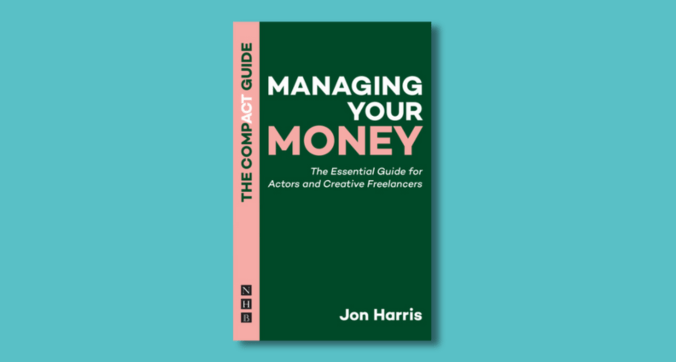
Managing Your Money: The Compact Guide by Jon Harris – out now, published by Nick Hern Books. Save 20% when you buy your copy direct from the publisher here.
Jon Harris is a Director of Accounting4Actors Ltd, a private specialist accountancy practice for creative industry professionals. He is a fully qualified Chartered Management Accountant. Having started his career in the arts as a director, Jon went on to produce and manage the finances of theatre shows in the West End and on tour all over the world. He was Producer at Shared Experience and was the founding Director of Stratford Circus arts centre. He is also a qualified Adult Education teacher, and was an Associate Tutor at Goldsmiths’ University Institute for Creative and Cultural Entrepreneurship.
 The Prompt Book