
Writing a screenplay that will impress readers and have the best chance of making it onscreen isn’t just about your story, characters and dialogue – you also need to make it easy and enjoyable to read.
In this extract from his book Screenwriting: The Craft and The Career, experienced script-editor, consultant and producer Philip Shelley shares advice on how to get your words to jump off the page, and keep your reader engaged from your first scene through to your last…
As (screen)writers, all we have are words. Because screenwriting and film stories are so overwhelmingly visual, this essential and obvious fact is rarely discussed. But the difficulties of the medium – conveying through words how a story will play out on film – mean that the way screenwriters use words and language is of critical importance.
The way you present your script on the page is an important aspect of screenwriting. What we write must be capable of imaginative translation into three-dimensional, physical, on-screen action. Like all stories, screenplays should be open to interpretation, but a director coming to the script should not have to ask the writer what their intentions are.
We need to use words with care, purpose and confidence. Overwrite and your words lose their value and impact, and risk the reader losing faith in the story you’re telling.
Here, I’m going to break down some things to think about when presenting your script on the page. However, before we start, here’s one tip that will make everything that follows easier:
Read lots of screenplays!
We all have our own way of writing, our own individual style and ‘voice’. ‘Voice’ – that hard-to-define quality, the thing that makes a writer stand out – is something that is talked about a lot in the industry, and it’s important to cultivate your own (in fact, it’s one of the first things I explore in my book).
The more you write, the more you will understand your own strengths and weaknesses. However, also try to read as many screenplays by other writers as you can. Doing so will help you understand the possibilities and limitations of screenplay storytelling and formatting. It will show you what’s possible, inspire you, and importantly make you think about how to communicate your own story on the page and how not to.
Useful resources for this include the BBC Writers Script Library, and the archive of unproduced scripts, outlines and one-page pitches on my own website.

Reading screenplays should be an important part of your education – the scripts of Brooklyn, Doctor Who and Normal People are just some of the works available in the BBC Writers’ Script Library.
And with that, let’s get into some specifics.
1. Use dedicated screenwriting software (not Microsoft Word!)
Write your screenplay using screenwriting software so that the layout and formatting is as close to perfect as possible. If you try to cobble together your screenplay using Microsoft Word, however well you mimic conventional screenplay format, your script won’t look right – and a professional script-reader may have doubts when they start reading it. Fortunately, this is one of the easier parts of the process to get right by using dedicated screenwriting software.
The industry-standard screenwriting software, worldwide, is Final Draft. It’s expensive, but a worthwhile investment if you’re serious about pursuing professional work as a screenwriter. Cheaper (or even free) alternatives are also available, such as Celtx, Highland 2, Script Reader Pro, Arc Studio, Trelby, and many others. It’s worth doing your research and asking around to work out which software might work best for you.
2. Tell your story with clarity and simplicity
Aim to communicate your story clearly, dynamically and comprehensibly. Avoid clumsily phrased and poorly structured sentences. For example, I once read this direction in a script: ‘Sally gives a stern look at George.’ Wouldn’t this have read better as ‘Sally gives George a stern look’? This may seem picky, but a script full of clumsily constructed sentences like this will not be easy or enjoyable to read.
Make sure what you write is fluent and clear, not overly florid and ‘writerly’ – e.g. don’t use ‘verdant’ for ‘green’. Avoid misuses such as ‘their’ for ‘there’, ‘right’ for ‘write’, ‘breath’ for ‘breathe’, and so on. Also be wary of using excessive direction to the reader through use of grammar in the directions for action – i.e. inserting exclamation marks, italics, emboldening, CAPITALS, etc., to indicate how exciting, emotional or surprising a particular event is. It will hold up the read, as the reader tries (and usually fails) to understand the rationale as to which WORDS are capitalised and WHICH aren’t. (You see, it’s DISTRACTING, isn’t it?)
3. Make your writing easy to visualise
As a writer, you need to recognise some of the subtle differences in how the reader and the viewing audience experience your story.
For instance, it is often harder for a reader to take on board five new characters all introduced for the first time in the same scene than it is for the audience. You need to guide the reader through the story helpfully, helping them to visualise these characters.
Write your script to make it as easy as possible for your reader to visualise how it will play – as on-screen action in their mind’s eye. Watching a film is a visual experience – and reading the script of the film should attempt to replicate this experience as closely as possible within the acknowledged formatting of screenplays. This is your challenge as a screenwriter, and the most important principle of screenplay presentation.
4. Introduce your characters impactfully
When we first meet new characters, you should describe them physically. However, it’s also important that the situation into which you introduce them is not visually neutral.
The reader should learn something about this new character not just from your description of how they look, but also through their role within the scene, their behaviour and manner, the way you introduce them into the story – how, for instance, they enter the room, their attitude towards the other character(s), and particularly by what they initially do or say. Make this first impression distinctive and intriguing.
5. Open your script on your protagonist
Unless you have a very good reason for not doing so, open the script with the character whose story it is. Sometimes, it’s only at page ten that as a reader I begin to realise who we should be following. And many times I then have to go back over those ten pages to reread them with a different perspective on the material.
(There are of course many exceptions to this principle that work, but if you do give your character a long, slow build-up, keeping them off screen for some time at the start of your story, be sure that you’re doing this deliberately!)

The opening scene of Jed Mercurio’s BBC series Bodyguard immediately introduces us to the protagonist, David, played by Richard Madden (scripts also available on the BBC Writers website).
6. Stick to your brief and don’t be prescriptive
As a screenwriter, it’s not your job to be specific about the way the film is going to be shot, technically. You shouldn’t, for instance, describe:
- Shot size (e.g. ‘extreme close-up’).
- Camera moves (e.g. ‘the camera pans slowly across the barren landscape’).
- Camera angles (e.g. ‘We look down from above at the car racing down the motorway’).
This distinction also applies to things like writing in ‘pre-laps’ from one scene to the next (i.e. where the dialogue from the following scene pre-laps the end of the present scene).
This is the accepted convention of professional screenwriting – but it’s worth saying that there are rare but allowable exceptions to this principle. There will be times when a certain camera move, angle, shot size, etc., will be absolutely integral to the story.
In terms of dialogue, underlining or emboldening particular words to emphasise how the writer imagines the actor will deliver the line should very much be the exception – used very sparingly, if at all. Any actor worth their salt will understandably baulk at being instructed by the writer how to stress a particular line.
Film-making is a collaborative process – so allow the imaginative space for others to inhabit your script and bring their own skills, ideas and interpretations to it, rather than being too prescriptive in your instructions. At the same time, though, often the best screenplays sing off the page because of particular details, so this is a tricky balancing act for the writer. The more scripts you read, the better informed you will be when making these sorts of presentational decisions.
7. Don’t cheat!
What you write should reflect what we will see and hear on screen. Don’t ‘cheat’ by giving your reader privileged information that won’t be accessible to your audience.
Here are some examples:
- Keep the character descriptions when we meet characters in the script for the first time to a simple physical description (e.g. ‘Trevor, 16, bad acne, tall with a stoop, scruffily dressed in a worn and dirty school uniform’). Don’t be tempted to add, for instance, ‘the son of a single mother, he has severe self-esteem problems. On the quiet he is highly intelligent but uses it for acts of extreme but secret cruelty.’ If you want to convey all this secondary information about Trevor, you will need to find a way to dramatise it on screen, rather than telling the reader something the audience will not at this point know.
- Don’t include in scene headings unfilmable information like ‘Two days earlier’, or ‘Several hours have passed since the last scene’.
Doing this demonstrates a fundamental misunderstanding about the purpose and intention of a screenplay: enabling your reader to get as close to possible to experiencing your script as they would experience watching the film.
8. Don’t commentate on events
Leave out ‘writerly’ explanation and interpretation in the writing of the directions (or ‘actions’, for those of you in the US). We don’t get this in the film and we don’t want it in the script. The directions should present the on-screen action without explaining or commenting on it. Ultimately, your reader is interested in the story rather than the writing.
(There are occasional exceptions to this – astute or amusing observations by the writer about the story they are telling that sometimes brighten the reading experience – but they are exceptions.)
Similarly, we don’t want to know what the character is (apparently) thinking in response to the events of the film, in straightforward explanations in the directions – this is more like novel-writing than screenwriting (e.g. ‘Eliza mulls this over in her mind’s eye but we won’t yet understand what her response means’). The directions should describe what we will be seeing on screen, nothing more, nothing less.
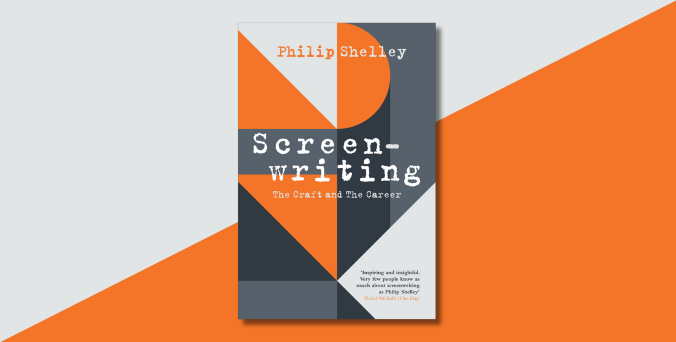
This is an edited extract from Screenwriting: The Craft and The Career by Philip Shelley – out now, published by Nick Hern Books. Get your copy at a 20% discount here.
Philip Shelley is a producer and script editor who has been working with screenwriters for the last thirty years. He has run the Channel 4 screenwriting course since 2010, and also runs the Greenlight Screenwriting Lab for new writers in Ireland. He has run many screenwriting and script-editing courses through his own script consultancy (www.script-consultant.co.uk) and with BBC Studios, ITV Studios, Screenskills, University of the Arts London, Baby Cow Productions, and many others.
He has extensive experience as a script editor on series like Waking the Dead (BBC), Inspector Morse (ITV) and many others. He was Head of Development for Carlton TV Drama for seven years, where he also ran the Carlton New Writers’ Course, and has worked in script development for BBC TV Drama and several independent production companies.
 The Prompt Book